FY 2026 ICD-10-CM Codes Released

Summary
In June, CMS and the CDC announced over 400 new FY 2026 ICD-10-CM codes for patient encounters and discharges. These will address emerging health concerns, enhance clinical specificity, support accurate reporting, and reflect advances in medical knowledge and terminology.The new International Classification of Diseases, Tenth Revision, Clinical Modification (ICD-10-CM) codes will become effective on October 1, 2025, and will be utilized for patient encounters and discharges occurring from October 1, 2025 – September 30, 2026. The update introduces over 400 new diagnosis codes that will address emerging health concerns, enhance clinical specificity, support accurate reporting, and reflect advances in medical knowledge and terminology. For FY 2026, several significant changes have been made to the ICD-10-CM code set. Notable additions include new codes to report diabetes in remission, various types of hyperoxaluria, disease progression in multiple sclerosis, thyroid eye disease, and immune complex membranoproliferative glomerulonephritis, to name a few.
New ICD-10-CM codes were also included in Table 6A of the FY 2026 Hospital Inpatient Prospective Payment System proposed rule.
Background
CMS and the CDC typically hold two Coordination & Maintenance (C&M) Committee meetings per year: one in the spring and one in the fall. CMS moderates discussion on revisions to the International Classification of Diseases, Tenth Revision, Procedure Coding System (ICD-10-PCS) code set, and the CDC moderates discussion on revisions to the ICD-10-CM code set. No decisions are made during C&M Committee meetings, and topics related to reimbursement, insurance, and payer issues are not discussed. Public comments are welcome during the meetings, with opportunities to submit written comments on the proposed code revisions during a designated period following each session.
The March 2025 ICD-10 C&M Committee meeting to discuss FY 2026 ICD-10-PCS codes was not public and the CDC did not participate in the closed session. It is expected that CMS and the CDC will resume a combined public meeting forum in fall 2025. The newly released ICD-10-CM codes for implementation on October 1, 2025 were approved in 2024.
Details of the FY 2026 Update
Type 2 diabetes mellitus (T2DM) in remission: This topic was originally presented at the March 2024 ICD-10 C&M meeting. Based on public comment, revisions to the proposal were made to address concerns of code selection in addition to diabetic complications, the addition of an Excludes 1 note, and to emphasize the importance of this code to report remission, classified by leading specialty societies as sustaining normal blood glucose levels for three months or more. Code details and tabular modifications were finalized during the September 2024 ICD-10 C&M meeting, resulting in the addition of one new code, E11.A: Type 2 diabetes mellitus without complications in remission.
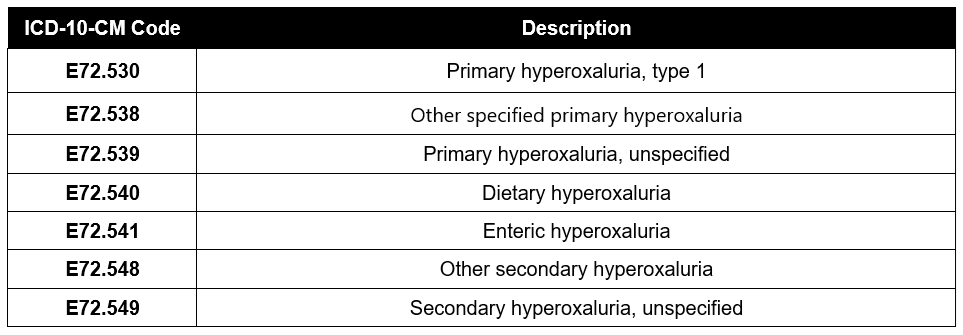
Hyperoxaluria: This topic was originally presented at the September 2023 ICD-10 C&M meeting. Hyperoxaluria is excess levels of oxalate, a toxic metabolite that cannot be broken down by the body; it can result from a diverse group of disorders. Requestors highlighted the need to accurately differentiate and report the types of hyperoxaluria, which may be due to inherited genetic mutations that lead to different phenotypes of the disease or acquired forms. Code details and tabular modifications were finalized during the March 2024 ICD-10 C&M meeting, resulting in the addition of seven new codes.
Table 1. New Hyperoxaluria ICD-10-CM Codes
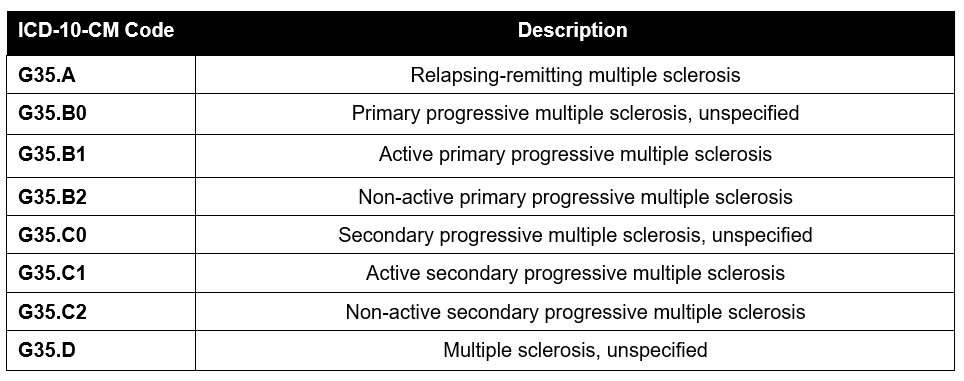
Multiple Sclerosis (MS) Phenotypes: This topic was originally presented at the March 2023 ICD-10 C&M meeting. The Food and Drug Administration’s Center for Drug Evaluation and Research requested new ICD-10-CM codes for MS to distinguish between different disease clinical courses, evaluation of disease progression, and long-term prognosis of MS in large population-based epidemiological assessments. Code details and tabular modifications were finalized during the September 2024 ICD-10 C&M meeting, resulting in the addition of eight new codes.
Table 2. New MS ICD-10-CM Codes
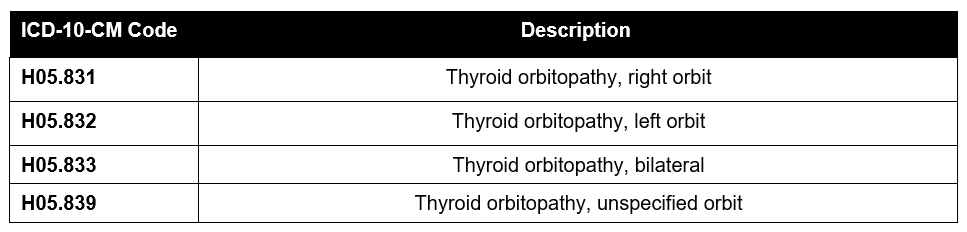
Thyroid Eye Disease (TED): This topic appears to have only been discussed once during the March 2024 ICD-10 C&M meeting. The requestor felt that the current ICD-10-CM code for TED in Chapter 4 Endocrine, Nutritional and Metabolic Diseases, E05.00 Thyrotoxicosis with diffuse goiter without thyrotoxic crisis or storm did not specifically identify TED patients, and they aimed to delineate TED from the underlying endocrine disorder. The requestor also cited the inconsistency of TED prevalence data made it challenging to understand the true burden of the disease. Code details and tabular modifications were finalized during that meeting, resulting in the addition of four new codes.
Table 3. New TED ICD-10-CM Codes
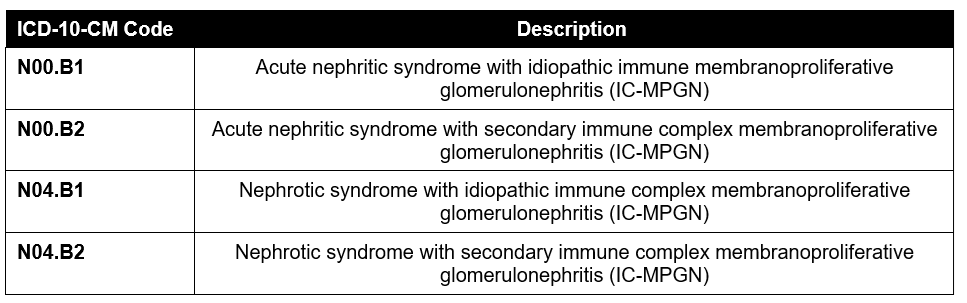
Immune Complex-mediated Membranoproliferative Glomerulonephritis (IC-MPGN): This topic appears to have only been discussed once during the September 2024 ICD-10 C&M meeting. Due to advancements in understanding the MPGN pattern etiology and subsequent revision of MPGN classification based on pathogenesis of paraprotein deposits in the disease, the Renal Physicians Association requested new codes to identify (IC-MPGN. Code details and tabular modifications were finalized during that meeting, resulting in the addition of four new codes.
Table 4. New IC-MPGN ICD-10-CM Codes
Widespread Impacts of New Codes
The introduction of new ICD-10-CM codes can have various impacts on different stakeholders across the healthcare system:
- Manufacturers: New codes can influence the demand for certain medical products or devices associated with specific diagnoses. They may need to adjust their access strategies based on changes in coding that reflect emerging health trends or conditions.
- Providers: Healthcare providers must stay updated with new codes to ensure accurate diagnosis and billing practices. This may require additional training and adjustments in electronic health record systems, potentially impacting workflow efficiency and reimbursement processes.
- Health Plans: Insurers may need to revise coverage policies and reimbursement rates based on new codes, which could affect cost management strategies and actuarial assessments. They must ensure their systems are updated to process claims accurately under the revised coding structure.
- Patients: Changes in ICD-10-CM codes can influence patients’ access to care if they impact insurers’ coverage decisions or providers’ treatment protocols. Patients might experience changes in out-of-pocket costs depending on how new codes affect insurance coverage.
- State/Federal Policymakers: Policymakers may use updated coding data for public health monitoring and resource allocation decisions. New codes can provide insights into emerging health issues, guiding policy development and funding priorities.
Partner With Us
Avalere Health continuously monitors and tracks all coding decisions, frequently attending public CMS and CDC meetings to gather insights and real-time information regarding the current and future coding landscape.. Stakeholders should remain vigilant about these developments to adapt effectively and leverage opportunities for improved patient outcomes and operational efficiencies. To learn more about how Avalere Health can help, connect with us.
Related Content


Services
From beginning to end, our team synergy
produces measurable results. Let's work together.
produces measurable results. Let's work together.